About Needle Punch Non Woven felt
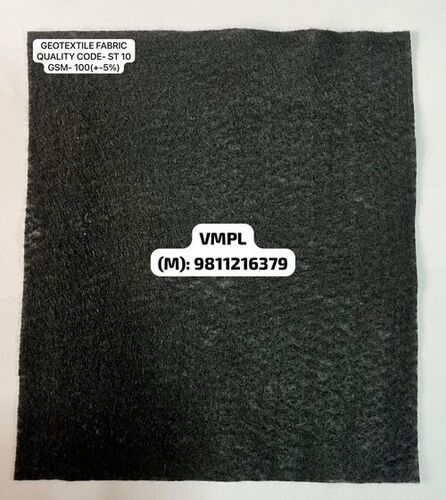
Geotextiles are planar and permeable members which are used in contact with soil/rock and/or any other geotechnical material for civil engineering applications. They are basically textiles manufactured from synthetic fibers . Thus, biodegradation is not a problem for geotextiles. The polymers used in manufacturing geotextiles are Polypropylene, Polyester, High Density Polyethylene and Polyamide (nylon) or a combination thereof, but large majority of geotextiles are made from Polypropylene and Polyester.
We offer geotextile fabric that has the right permeability to ensure that the sand is properly filtered or drained. The properties of our fabric make it an ideal product for various applications like assisting in drainage, controlling erosion, and even increasing the stability of soil. It is available in all forms to aid stabilization, filtration, and separation. You can count on us for your requirement of wholesale geotextile fabric in India. Our staff has been trained to ensure the fabric has a precise composition.
Weak/unstable formations mostly have subsoil and/or subgrade of expansive clays (e.g. Black Cotton Soil). These soils swell when mixed with water, thereby losing shear strength, and shrink on drying. Swelling (due to ingress of water in rainy season) and shrinkage (in dry season) causes disturbance to track parameters and ballast penetration.
This problems can be addressed by reducing ingress of water in the formation, by providing a non-woven geotextile separator layer, which reduces water entering into the subgrade and also ` prevents upward migration of fine particles from fine grained expansive clays into the top coarse layers.
In addition, provision of a blanket layer acts as separator as well as reinforcement layer reducing the pressure on the formation below. In case providing blanket layer of larger thickness in running traffic condition is not possible, its' thickness can be reduced by providing a reinforcement layer of geogrid in the middle of the blanket layer.
Uses in Landscaping
Fast Drainage and passage of air and Fertilizers
Minimizes Penetration by Weeds
Prevents unwanted growth beneath the fabric
Prevents erosion of Soil
It is placed over natural Soil and Covered with a layer of Decorative stone
Weed Growth in inhibited .
Assures long term minimal maintenance of the landscape
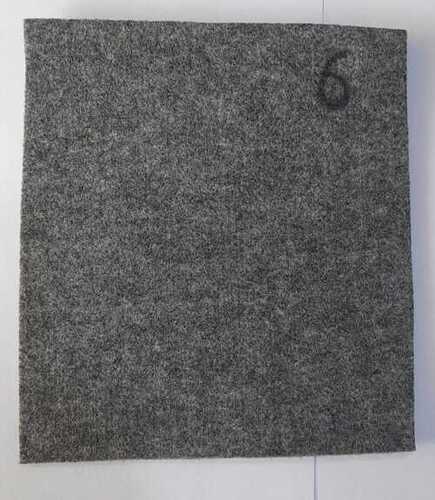
Polyester Construction for VersatilityCrafted entirely from polyester fibers, this non woven felt ensures both durability and adaptability. Its plain style and neutral color choices of black, white, and grey make it suitable for various uses, from insulation and filtration to interior design. The non woven structure, formed through needle punching and thermal bonding, delivers strength and stability, catering to custom requirements.
Thermal Bonding for Enhanced DurabilityThe thermal bonding process used in this felt gives it remarkable resilience and dimensional stability. This method ensures the fibers retain their integrity even under stress or frequent use, making the fabric a favored choice for both industrial and domestic environments. Thermal bonding also improves the material's resistance to fraying and deformation.
Size and Weight AdaptabilityEach roll of Needle Punch Non Woven Felt measures 200 meters in length and 2.1 meters in width, with a fabric weight of 100 GSM. This configuration makes the material easy to transport, cut, and install for broad or customized projects. The product's size and light weight deliver efficiency for fabricators, builders, and end-users across diverse industries.
FAQ's of Needle Punch Non Woven felt:
Q: How is Needle Punch Non Woven Felt made?
A: Needle Punch Non Woven Felt is manufactured using polyester fibers that are entangled by barbed needles. Following this, a thermal bonding process is applied to further bind the fibers, creating a durable and cohesive non woven fabric with a plain texture.
Q: What are the typical applications for this felt?
A: This Needle Punch Non Woven Felt is suitable for insulation, filtration, padding, packaging, automotive linings, and home furnishing. Its strength and flexibility make it ideal for both commercial and industrial usage.
Q: When should I use this fabric in my projects?
A: You should choose this polyester non woven felt whenever you require a lightweight, strong, and versatile material, especially for projects needing thermal resistance, minimal fraying, or easy maintenance over large areas.
Q: Where can I purchase this product in India?
A: The felt is available through multiple distribution channels across India. You can obtain it from dealers, wholesalers, retailers, or directly from manufacturers, as well as through specialized service providers and suppliers.
Q: What benefits does the thermal bonded process offer?
A: Thermal bonding enhances the felt's tensile strength, stability, and resistance to wear and deformation. This ensures lasting performance, making it suited for applications where durability is essential.
Q: How do I process or cut the fabric for use?
A: The polyester non woven felt can be easily cut using standard fabric shears or industrial cutting tools. Its plain structure and moderate weight allow for precise customization without edge fraying, streamlining fabrication or on-site work.
Q: What advantages does polyester non woven felt provide over traditional woven fabrics?
A: Unlike woven fabrics, this non woven felt is both lightweight and resilient, doesn't unravel, and can be produced in larger sizes for better coverage. It is also more resistant to moisture and wear, making it advantageous in demanding or high-traffic settings.


 Send Inquiry
 Get Latest Price


 Send Inquiry


